
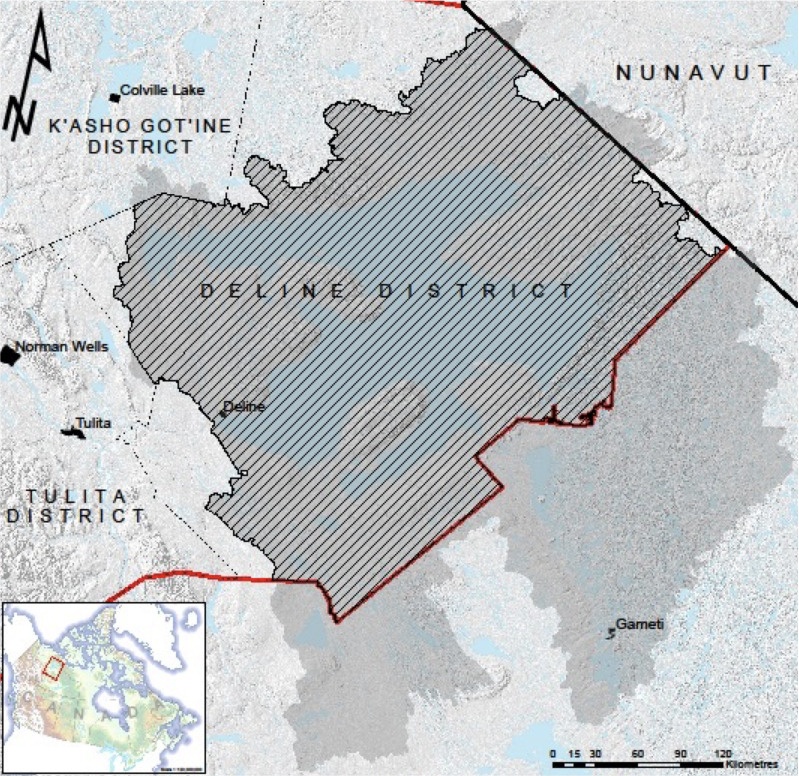
The Tsá Tué Biosphere Reserve is located in Canada’s Northwest Territories. The area is the homeland of the Sahtuto’ine, the ‘Bear Lake People’. It encompasses Great Bear Lake, the last large pristine arctic lake, and part of its watershed. Boreal forest and taiga cover much of the watershed and form the habitat of wildlife including muskox, moose and caribou. The only human residents are the traditional First Nation Dene community of Délı̨nę, ‘where the water flows’.
For more information: https://www.srrb.nt.ca/

This status implies a vision for the protection of both natural and cultural heritage. Its main objective is to create spaces for protection, contact, appreciation and sustainable development of a given land. Biosphere reserves are created by the United Nations Educational, Scientific and Cultural Organization (UNESCO) within the framework of its Man and the Biosphere (MAB) Programme. Each Biosphere reserve is divided into three sections: a core area which is a strict space for protection and conservation; buffer zones which are mainly used for activities considered compatible with the preservation of the environment (education, training, etc.); and finally a transition zone which is more associated with economic and socio-cultural development.
Nomination: According to the MAB website, this is how to apply
- To apply for Biosphere Reserve status, complete the Biosphere Reserve Proposal Form or the Transboundary Biosphere Reserve Proposal Form
- Biosphere Reserve Periodic Review Form (FR)
- The International Advisory Committee for Biosphere Reserves (IACBR) will review biosphere reserve proposals for recommendation to the International Coordinating Council (ICC).
- The ICC will make its decision and the Director-General of UNESCO will inform the State in question.
Duration: temporary, to be renewed every 10 years.
Useful links:
World Biosphere Reserve Network

